
All the Lives Alive Inside Me | 2026
A solo exhibition at Hecho a Mano in Santa Fe, NM
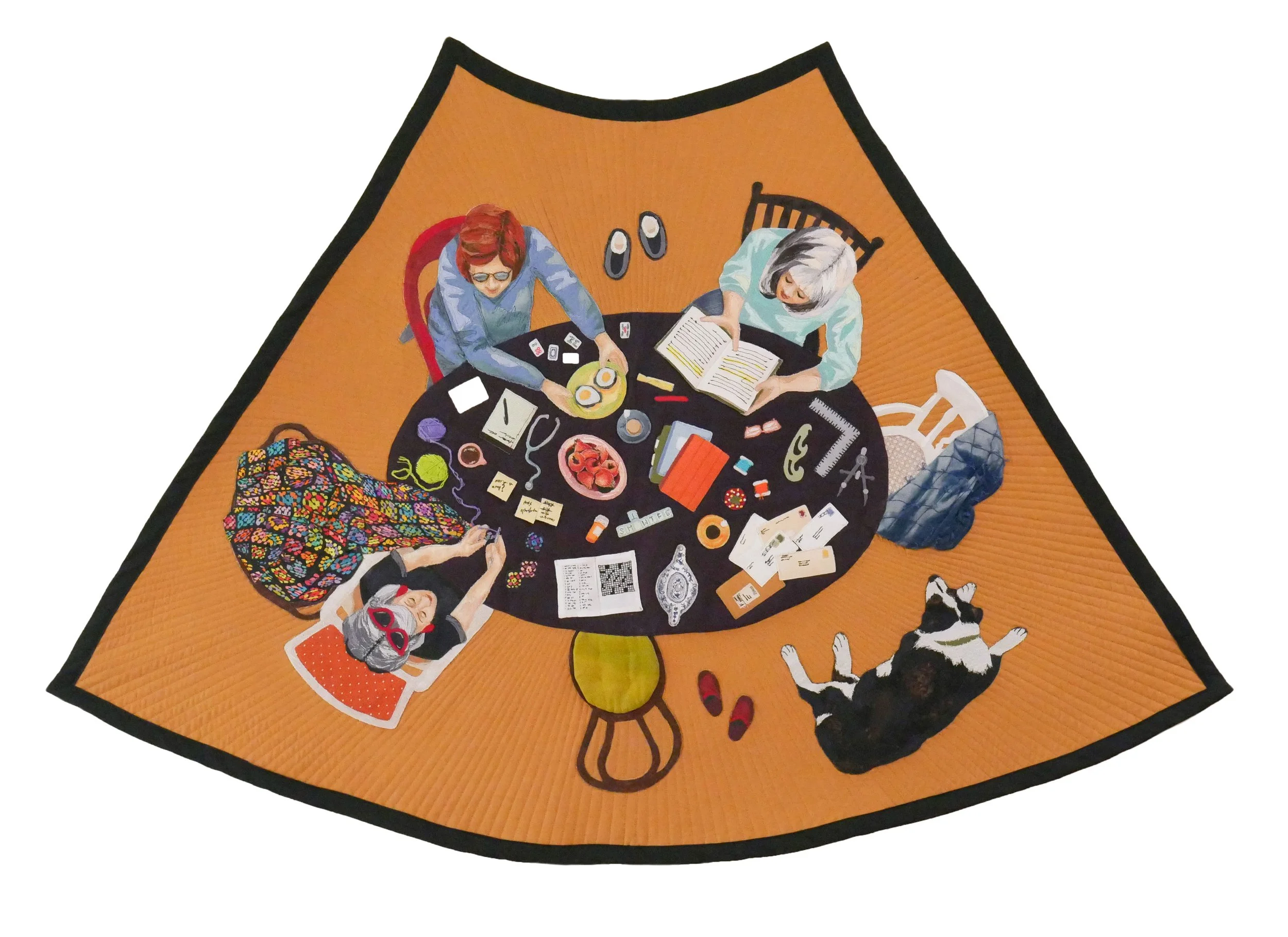
Fruits of Our Labor, 2026, appliqué quilt with hand embroidery, 36 x 52 in.
All the Lives Alive Inside - Solo exhibition at Hecho a Mano Gallery in Santa Fe, NM - 9/5/26-9/29/26.
For printmaker and fiber artist Eliza Lutz, the work of caregiving is a legacy made visible through the material traces it leaves behind – a quilt, an apron, a handwritten note. Merging printmaking and fiber art, their upcoming show traces the shape and texture of carework as it has unfolded across the artist’s lifetime. Through embroidered prints on paper and quilted portraits assembled from loved ones’ clothes, these works chronicle the giving and receiving of care in all its many forms, from child rearing to elder care, from domestic arts to community organizing.
This body of work was conceived of and created during a period of immense transition in the artist’s life – after years of caretaking for three aging family matriarchs, all unexpectedly passed away within five months of each other. Over the following year, as Lutz and their partner navigated grief and sorted through the physical remnants of their lives, they found themselves at a crossroads – and, with more time and capacity at their disposal, they decided to enter a new chapter of caregiving by becoming parents themselves. “Now pregnant with our first child, I have become more deeply rooted in this lineage of carework than ever before, an embodiment of the lives, care, and labor, I carry within me,” Lutz says.
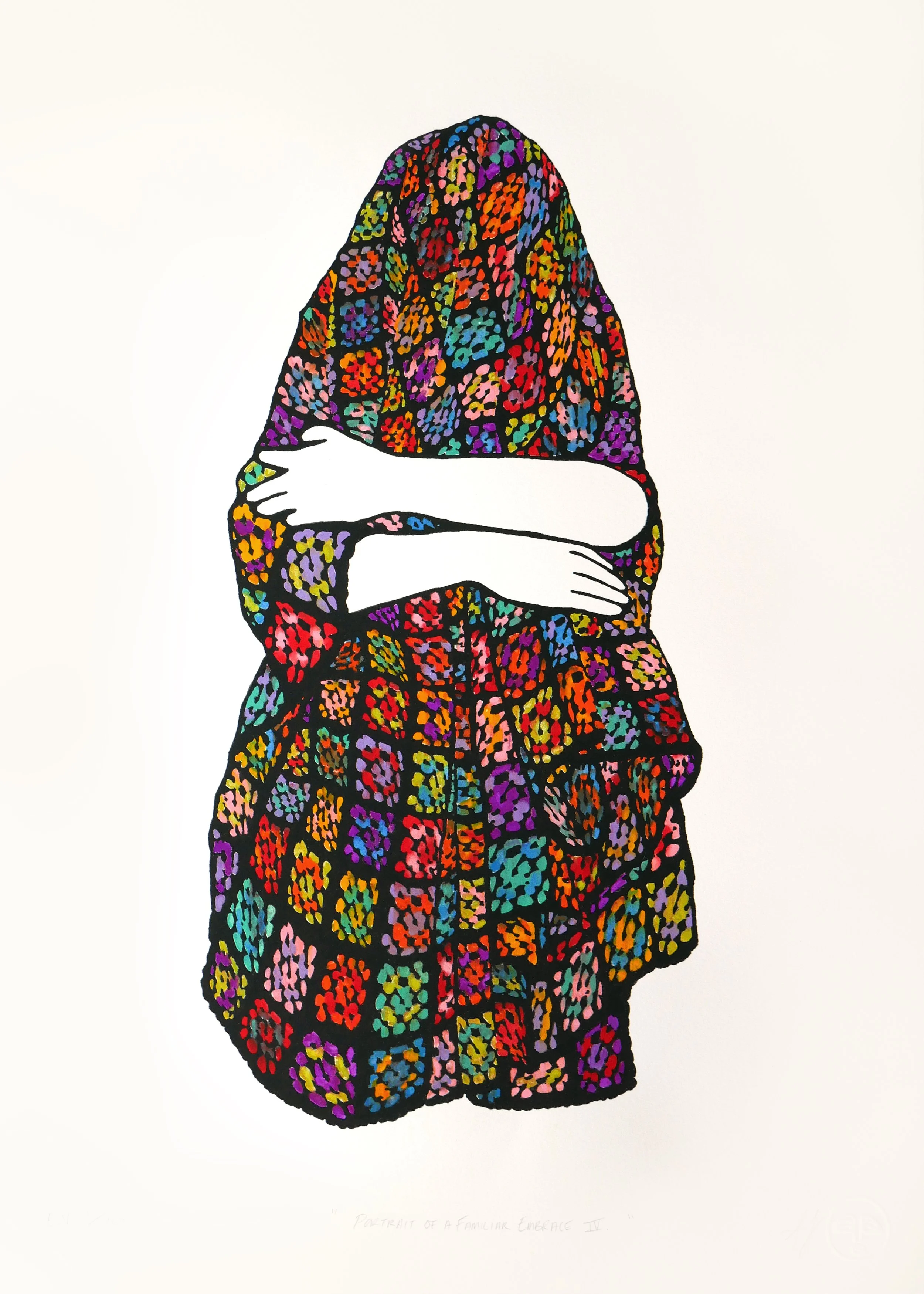
Portrait of a Familiar Embrace IV., 2026, 2-layer gouache silkscreen, 21 x 15 in.
For Lutz, the show is “a love letter to this lineage and my place within it, a celebration of carework’s intimate and temporal textures.” It consists of three distinct yet interrelated series. The first, Mending, is a series of quilts featuring appliqué collage and hand embroidery, each a meditation on the reciprocity of intergenerational care and made from clothing and fabric scraps passed down to the artist. Portrait of a Familiar Embrace reanimates the handmade textiles of Lutz’s childhood, each using a different printmaking method and embroidery technique to pay homage to the physical reminders of care we hold onto. Fencesitter captures fleeting moments of care contained within us through one-of-a-kind monotypes of reimagined sonograms.
The emphasis on fiber art represents a shift in Lutz’s practice: “Whereas printmaking has always felt like a natural extension of my disabled body – where repetition and imperfections reflect the tedium of chronic illness – fiber art provides a direct connection to my experiences of caregiving,” they say. “Like stitching and mending, giving and receiving care are deeply intimate acts, and ones that have long been denigrated and obscured for their association with feminine and domestic labor. It is this in/visibility that connects carework and disability, an elusive relationship that I strive to convey through my merging of print and fiber.”
We all need and receive care within our lives, and we all provide care in one form or another,” Lutz says. “Why, then, does this labor often feel so invisible and undervalued?” This question shaped each series in the show, connecting the artist’s personal experiences to the ways carework has long been denigrated and obscured for its association with feminized and domestic work. This pattern was reinforced as they sifted through the lives of these matriarchs, unearthing their hidden and quiet work – a leather nursing bag, binders of recipes, mended children’s clothing, unfinished weavings, founding documents for the state’s first hospice organization. “Whether in the domestic or professional sphere, each woman engaged in labor historically deemed as inferior simply for being ‘women’s work,’” Lutz says — and only after their passing, when surrounded by relics of their labor, did it become clear how invisible it was during their lifetimes. “By using fragments of their work as well as feminized mediums like embroidery and quilting throughout this show, I aim to make their labor – and carework in general – more visible and tangible to behold.”
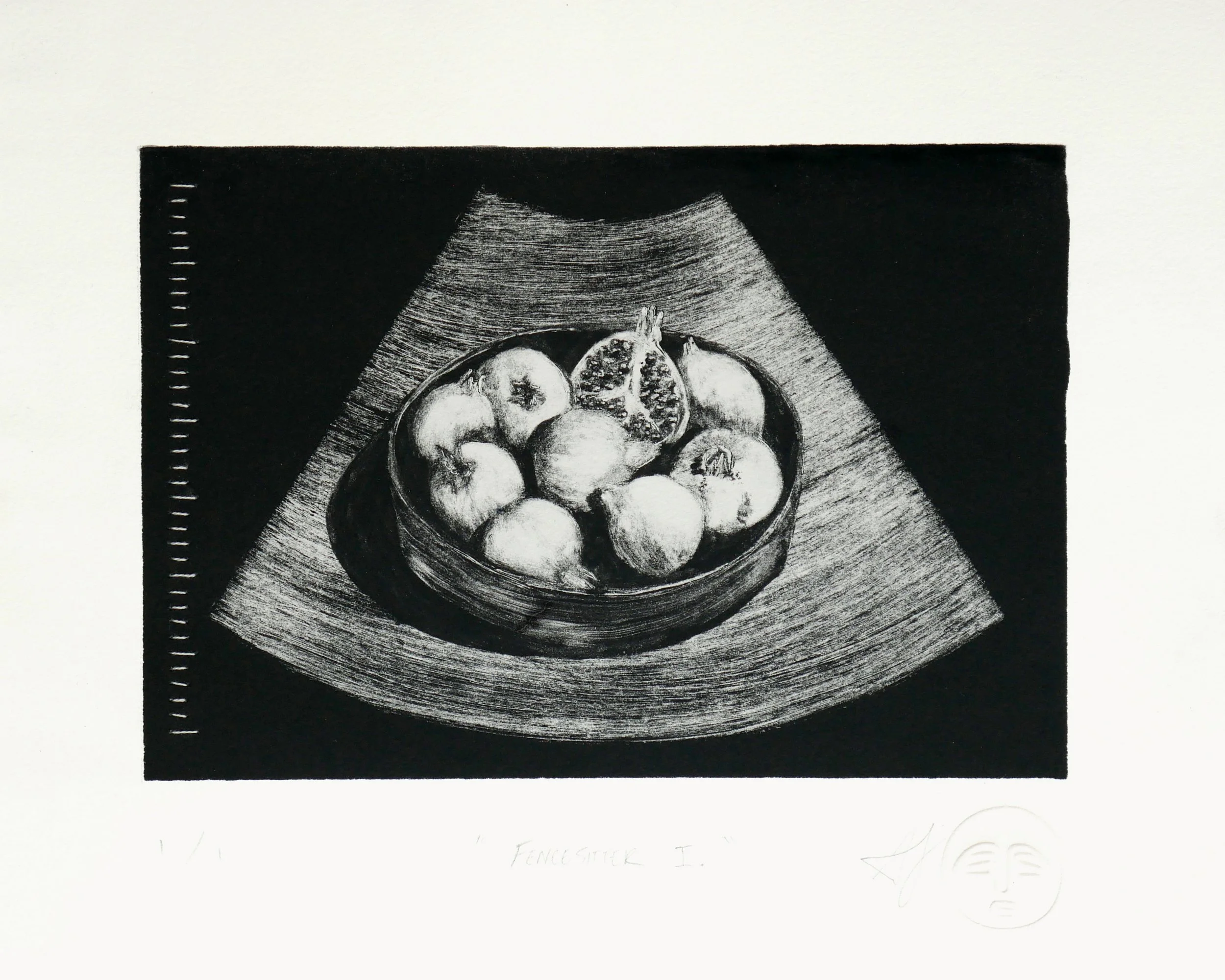
Fencesitter I, 2026, monotype with hand embroidery, 8 x 10 in.
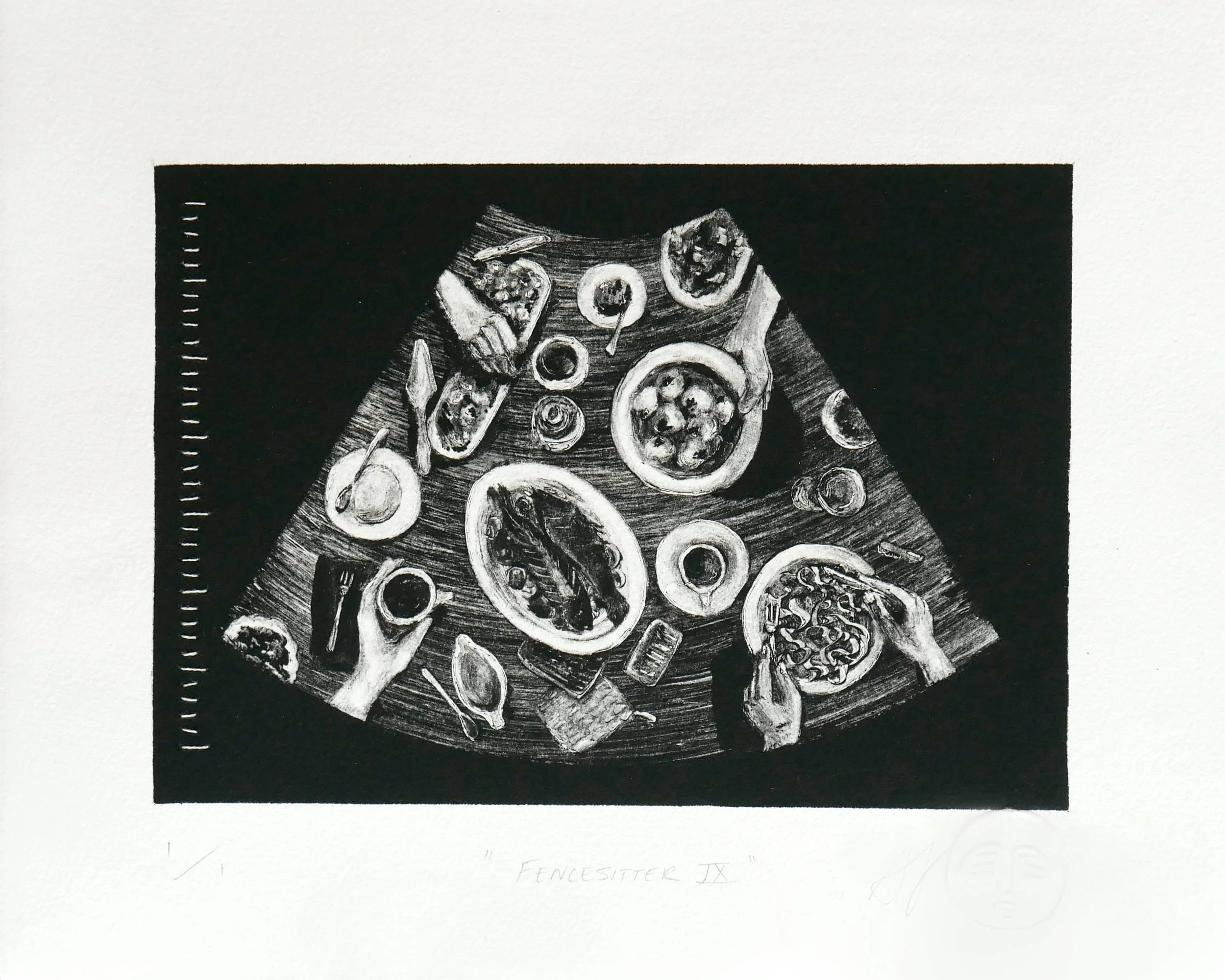
Fencesitter IX, 2026, monotype with hand embroidery, 8 x 10 in.
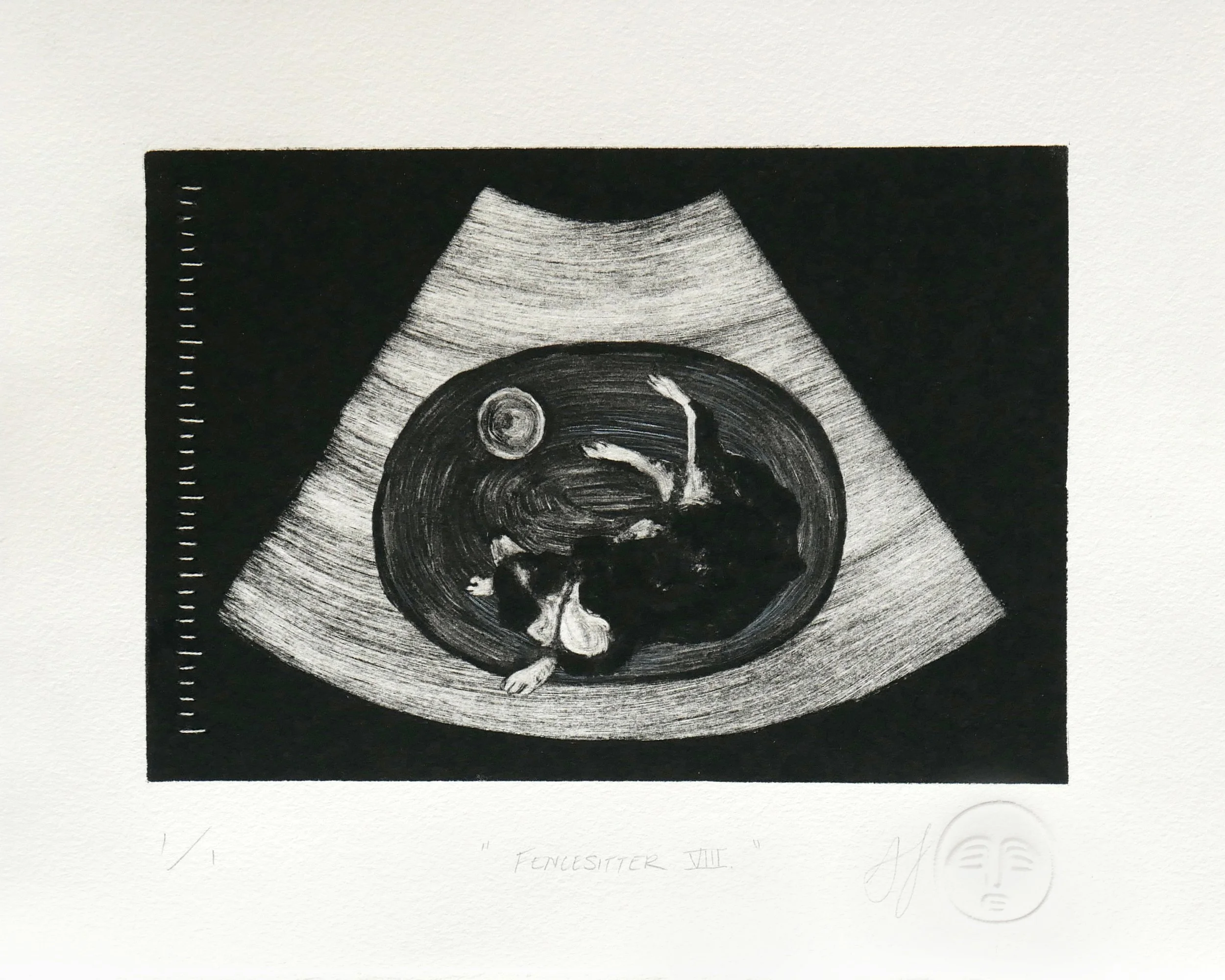
Fencesitter VIII, 2026, monotype with hand embroidery, 8 x 10 in.
The invisibility of carework resonated deeply with Lutz, not only as a caregiver but as a disabled and non-binary pregnant person. “Much of my past work has centered on the in/visibility of living with a chronic illness and the dissonance felt in not being fully perceived – an experience paralleled in my gender fluidity,” they explain. Now, as they move from one form of obscured and feminized labor to another – elder care to child rearing – the need to make this work feel seen, valued, and independent of gendered expectations feels more essential than ever. For these reasons, Lutz says, “This show is a natural extension of my prior work and is at its core about making the invisible visible – it is about finding my place within a lineage of feminized labor as a proudly disabled, non-binary, and pregnant person and a welcome receiver and giver of care holding many lives and identities within me.”
All the Lives Alive Inside me is on view at Hecho a Mano Gallery in Santa Fe, NM from 9/5/26-9/29/26.